
Asphalt is a durable and versatile paving material that is widely used for parking lots, driveways, and roadways in commercial settings. Although asphalt surfaces are resilient, they are prone to various types of damage over time.
Asphalt surfaces should be smooth, durable, and well-maintained for safe transportation on roads, driveways, and parking lots. However, harsh weather, heavy traffic, and time inevitably lead to cracks, potholes, and surface deterioration.
When asphalt problems are ignored, safety hazards can arise and repair costs can rise. Asphalt pavement and Asphalt road Work can be significantly extended if you understand different repair techniques and know when to use them.
Listed below are the most common asphalt repair techniques and when commercial companies should consider them.
Why Timely Asphalt Repairs Matter?
Do you ignore that small crack or pothole? This could lead to a much bigger headache down the road. Especially when water is involved, small asphalt problems can quickly become major ones.
Asphalt is primarily attacked by water. As it seeps into cracks, it weakens the foundation. The damage is worsened further when the water freezes and expands when the temperature drops. It doesn’t take long for a tiny crack to turn into a pothole that causes damage to vehicles or causes people to trip and fall.
You will also save a lot of money if you address repairs early. A simple patch job today might cost only a fraction of what a complete resurfacing will. Asphalt maintenance is like healthcare—preventive care is always cheaper than emergency care.
Common Types of Asphalt Damage
Cracks
Lines running through your pavement aren’t just cosmetic. Cracks on asphalt can take several forms, each telling a different story. Cracks caused by fatigue (also called alligator cracks, because they look like alligator skin) usually indicate that the foundation is failing.
Typically, they appear in areas with high traffic. Cracks that run longitudinally often result from poor joint construction or daily temperature fluctuations. In contrast, transverse cracks run perpendicular to the centerline and are frequently caused by excessive stress or temperature changes.
Usually, block cracks are caused by aging pavement and form rectangular patterns. Typically, edge cracks appear along the edges of pavements without curbs and indicate poor drainage.
Potholes
Have you ever noticed how old roads follow the wheel paths of sunken tracks? This is rutting, which occurs when repeat traffic loads compress the pavement or the underlying layers.
Rutting can cause water to collect in channels, increasing the risk of hydroplaning. Often, it indicates underlying structural problems with the pavement system.
These troublesome depressions over time are caused by heavy vehicles pushing the asphalt downward. Rutting can develop much faster in commercial areas with heavy truck traffic than in residential neighbourhoods. Deeper ruts indicate a more serious structural problem.
Raveling
Raveling occurs when the surface of your asphalt looks rough and stones begin to come loose. As the asphalt material wears away, aggregate becomes exposed.
Raveling usually begins gradually but accelerates over time. The pavement becomes more vulnerable to damage as more stones become loose. Water can easily penetrate the surface, causing further deterioration, especially during freezing and thawing.
Insufficient compaction during installation, poor mix quality, or oil and gas spills can all contribute to raveling. When it begins, addressing it quickly can prevent more extensive damage.
Key Asphalt Repair Techniques
1. Crack Filling and Sealing
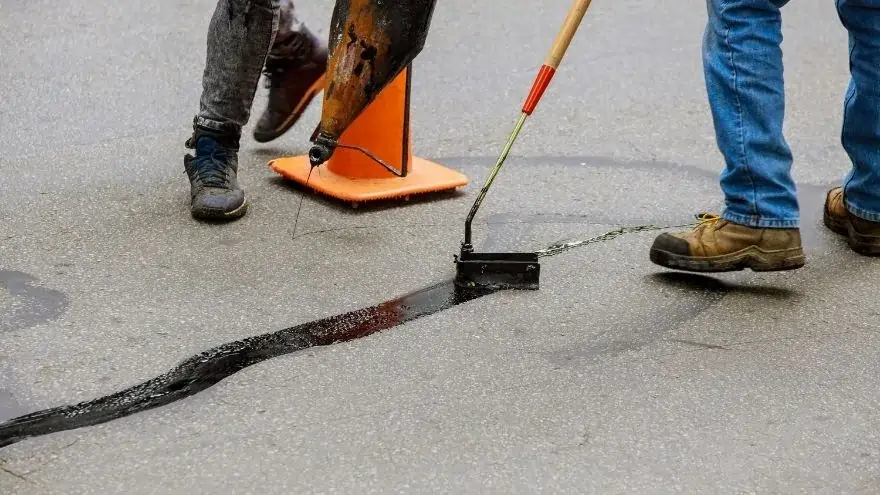
Sealing and filling cracks in your asphalt is like first aid. By using these techniques, water is prevented from entering the pavement structure, preventing more serious damage in the future.
Cracks are cleaned out, sometimes with compressed air, then filled with a specialized material. Crack filling is usually done with asphalt emulsion products or similar materials that sink into the crack.
As the pavement expands and contracts, rubberized materials are used to seal cracks. Earth Movers International evaluates each crack individually to determine the best treatment.
When to Use It:
Crack sealing should be used when the cracks are narrow, less than half an inch wide. It usually spreads to the surface and hasn’t gone too deep.
2. Pothole Patching
Potholes can be prevented from growing bigger by taking action as soon as they appear. Pothole repair can be accomplished in a variety of ways, each with its advantages. Filling the hole with asphalt mix and compacting it is the fastest fix.
Although fast and inexpensive, this method usually only provides a temporary solution. Patching a semi-permanent pothole involves removing water, and debris, and squaring off the edges before applying a durable fill material.
Full-depth patching is the gold standard for truly permanent solutions. In this process, the damaged area is cut out, the base layers are rebuilt if necessary, and new hot-mix asphalt is installed. Instead of just covering up the problem, this approach addresses the root of the problem.
When hot asphalt mixes aren’t available in winter, cold patch materials provide a temporary fix until more permanent repairs can be made.
When to Use It:
Whenever you have localized damage from potholes, crumbling edges, or water-collecting sunken spots, you should choose asphalt patch repair.
3. Asphalt Overlay
An overlay is like giving your pavement a new coat of paint. The process involves layering a new layer of asphalt over the existing surface, which typically measures 1.5 to 2 inches in thickness.
Contractors must address any existing issues like cracks or depressions before applying the overlay. In order to ensure proper bonding between the old and new layers, the surface is treated with a tack coat. After that, fresh asphalt is laid down and compacted.
Overlays restore pavement smoothness, increase structural strength, and extend pavement life by 8-15 years. If the existing pavement is structurally sound but has deteriorated on the surface, these are excellent options.
Earth Movers International carefully evaluates your specific situation before applying an overlay. The underlying pavement may require other techniques if it has structural issues.
When to Use It:
When a pavement shows signs of ageing, such as raveling (the loss of aggregate), extensive surface cracking, and roughness, but the issues are predominantly surface-level, an overlay can restore smoothness and performance.
Traffic and UV rays can dull the black appearance of asphalt over time. The appearance of a pavement can be refreshed with an overlay.
4. Full-Depth Reclamation
In cases of severe asphalt damage, it’s sometimes best to start from scratch. In full-depth reclamation (FDR), the existing pavement material is recycled to create a new base layer.
The process involves pulverizing the asphalt and the underlying material. Afterwards, a strong base layer is formed by mixing the mixture with stabilizing agents such as cement or emulsion, reshaping, and compacting it. The asphalt surface is then resurfaced.
FDR is eco-friendly because it reuses existing materials instead of disposing of them. Furthermore, it addresses structural problems that cannot be resolved by surface treatments alone.
It often proves more cost-effective than complete reconstruction, especially for severely damaged pavements, despite its extensive nature.
When to Use It:
You should replace your pavement if it is damaged by over 30%, has drainage issues, widespread potholes, or crumbling edges.
5. Asphalt Milling and Resurfacing
Resurfacing and milling asphalt is an excellent solution for distressed and failing asphalt. You can use this method if you need to repair a large portion of asphalt pavement or resurface the entire parking lot.
As part of this process, contractors remove all the asphalt and grind it up into fine gravel-like pieces to create a stronger aggregate from it.
Recycling asphalt that can’t be used to repair your property will be done in a processing plant. As a result, the asphalt industry can remain sustainable and maintain a low carbon footprint.
When you resurface or repaving your property, the asphalt that’s used to create the new aggregate will be used. With proper care, you will have a beautiful, smooth, sturdy, and clean blacktop that will last for many years.
When to Use It:
Pavement with deep surface damage may be cracked, potholed, or have deformed surfaces that affect ride quality without affecting the base layer.
Heavy traffic or inadequate initial construction have caused the pavement to form ruts or depressions. Resurfacing can restore a level and smooth driving surface by milling these imperfections away.

How to Choose the Right Asphalt Repair Method?
You don’t have to guess how to fix your asphalt. Several factors determine how much you’re willing to spend, how quickly you need it done, and how long you want it to last.
Extent of Damage
First, determine the extent of the damage. If there are just a few cracks or a single pothole, you may only need to patch or seal the crack. The surface might need repair, resurfacing, or a complete replacement if it’s worn out, missing chunks, or sinking.
Limitations on Budgets
It’s a fact that cost matters. Repairs like crack sealing or small patch jobs are relatively affordable and get the job done for now. You’ll need to invest more if you’re dealing with a bigger problem, such as milling and resurfacing or full-depth repairs.
Time Constraints
A quick fix can sometimes prevent downtime or traffic jams. When that happens, fast methods like patching or sealing are ideal — they can be completed within a few hours. You will benefit from stronger, longer-lasting surfaces if you are able to afford more time.
Optimal Life Expectancy
Patch jobs and sealing will do if you just need a temporary fix. You’ll need to repeat this process more often. Alternatively, if you want a repair that lasts for years, you’ll want an overlay or full-depth repair.
Choose Earth Movers International for Your Asphalt Repairs
Earth Movers International understands that asphalt care goes beyond appearances—it’s about safety, durability, and getting the most out of your investment. Our asphalt repair techniques include crack sealing, patching, overlays, milling, and full-depth reclamation. You can customize your pavement repair plan according to its unique condition.
With solutions that are both eco-friendly and cost-effective, we handle everything from small cracks to major surface damage. Asphalt surfaces are smooth, safe, and long-lasting when our team maintains them using the latest methods. Contact Earth Movers International today for a free site consultation and let’s figure out what you need to do.

